What is a doubloon?
Everyone knows the word. Fewer know that the real doubloon was a small gold coin, and the giant most people picture had a different name.
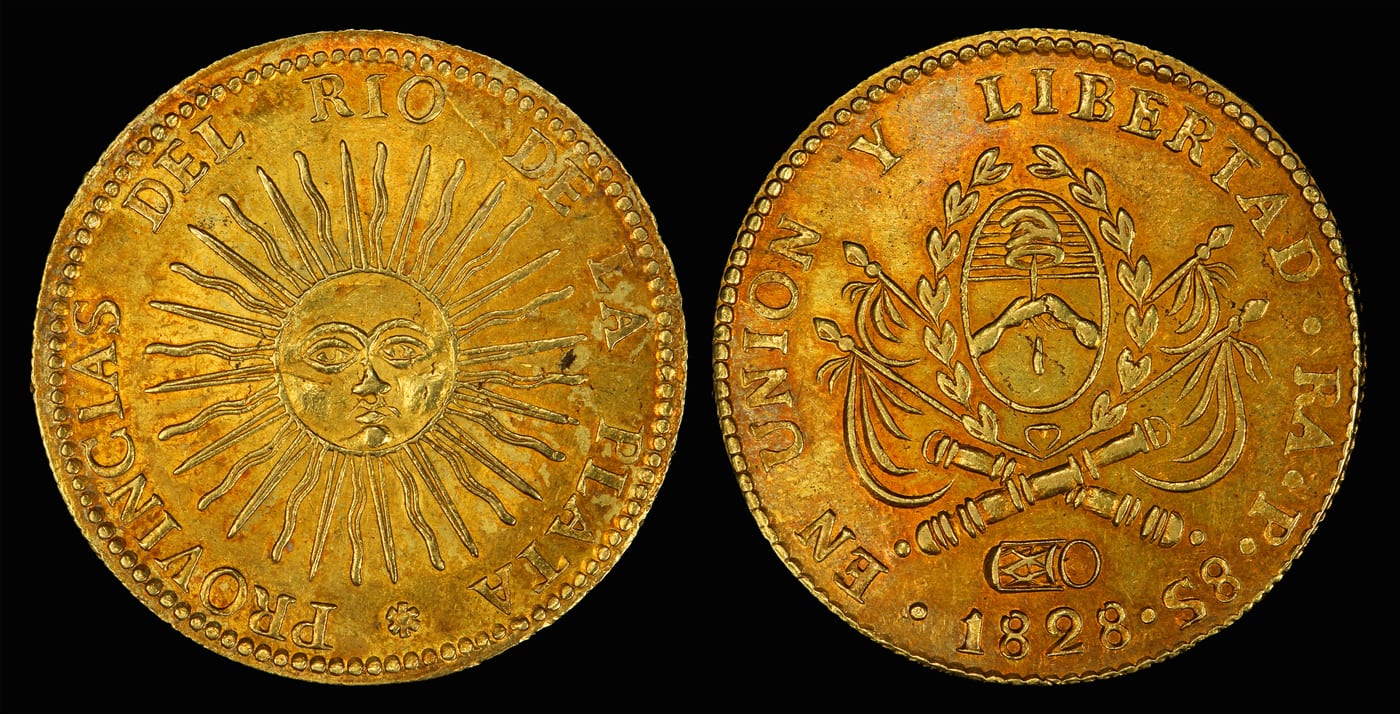
Say the word doubloon and most people picture a fat disc of pirate gold. The truth is a little more precise and a lot more interesting. The doubloon was a real Spanish coin, but the one that earned the name was not the giant of the storybooks. To understand it you have to meet the gold half of the Spanish money system: the escudos.
Gold, silver, and how they fit
Spanish colonial money ran on two metals. Silver was the everyday cash, counted in reales, and the famous 8 reales was the piece of eight. Gold was the high-value money, counted in escudos. The gold coins ran in the same doubling ladder as the silver, from 1 escudo up to 8 escudos, and one escudo of gold was worth about 16 reales of silver, roughly two silver dollars. Our full reales and escudos reference lays the two ladders side by side.
So gold and silver were not separate currencies. They were two ends of one system, and a merchant could reckon a gold escudo against a stack of silver reales without blinking.
The real doubloon
The word doubloon comes from the Spanish doblon, meaning “double”. Strictly, it named the 2 escudos gold coin, worth about 32 reales, or roughly four silver dollars. That is the historical doubloon: a modest gold coin about the size of a small button, not a hand-filling slab. It was worth a lot, since gold always is, but it was pocket money for the wealthy rather than buried-chest treasure.
If a doubloon is only 2 escudos, what is the big gold coin everyone pictures? That is the 8 escudos, the largest regular gold piece, worth about 128 reales, or roughly sixteen silver dollars. It is sometimes called the “double doubloon” or, in Spanish, the onza. This is the coin that shows up in salvage headlines when a wreck gives up its gold, and over the years the loose habit of calling any large gold coin a doubloon stuck to it. Both coins are genuine. The name simply migrated from the small one to the large one through stories.
What a doubloon bought
Gold moved real money. A single 8 escudos was worth sixteen days of a laborer’s silver, so these coins settled large debts, funded voyages, and traveled in the strongboxes of the treasure fleets rather than in daily change. When a ship of the 1715 Treasure Fleet went down off Florida, the gold escudos in its hold were among the most concentrated value on board, which is exactly why modern salvors celebrate every one they recover.
The gold coins were struck by the same mints as the silver, from Mexico City to Bogota, and they carry the same kinds of marks: a mint stamp, an assayer initial, a denomination, and a date. Reading them works the same way as reading a silver cob, which we cover in how to identify a Spanish colonial coin.
What a doubloon is worth today
Gold sits well above silver in the coin market, and the numbers reflect it. Where a silver 8 reales might ask a few hundred dollars raw, a gold 8 escudos commonly runs from the low thousands into the tens of thousands, set by date, mint, grade, and above all provenance. A gold coin tied to a named wreck with a salvage certificate commands the top of that range. A worn, common-date example with no story sits lower, though gold rarely falls cheap.
As with silver, treat the figures you see online with care. Most come from dealers selling the coin, so they sit near the top of the market. If you own a gold coin and want a real number, get it identified, then compare recent auction results for the same denomination and mint rather than trusting a single retail price. Our coin values page explains the gap in plain terms.
The doubloon, in short, is not a myth. It is Spanish gold, escudos rather than reales, and the coin that carries the name today, the great 8 escudos, is the one the sea guards most jealously.
Sources
Frequently asked questions
What is a doubloon?
A doubloon is a Spanish gold coin. Strictly, the word means the 2 escudos piece, from the Spanish doblon meaning 'double'. In loose modern use, people call the large 8 escudos a doubloon too. Gold escudos ran from 1 to 8, with one escudo worth about 16 silver reales.
How much was a doubloon worth?
The true doubloon, the 2 escudos, was worth about 32 reales, or roughly four silver dollars. The 8 escudos, often called a doubloon today, was worth about 128 reales, or roughly sixteen dollars. One escudo of gold traded for about 16 reales of silver.
What is the difference between a doubloon and a piece of eight?
Metal and value. A piece of eight is silver, the 8 reales, worth one dollar. A doubloon is gold, worth several dollars or more depending on the denomination. The two coins were part of the same system, with gold escudos and silver reales.
How much is a Spanish doubloon worth today?
Gold escudos sell for far more than silver. An 8 escudos coin commonly runs from the low thousands into the tens of thousands of dollars, depending on date, mint, grade, and shipwreck provenance. These are broad ranges, not an appraisal of a specific coin.
Why do people picture a doubloon as a huge gold coin?
Fiction. Pirate stories and films used 'doubloon' for any big gold coin, so the word attached to the large 8 escudos rather than the smaller 2 escudos it originally named. Both are real; the giant is just the more memorable one.