The 1715 Treasure Fleet
On one July night in 1715, a hurricane sank an entire Spanish fleet off Florida and scattered a fortune in silver and gold along the coast. Three centuries later, the coins are still coming up.
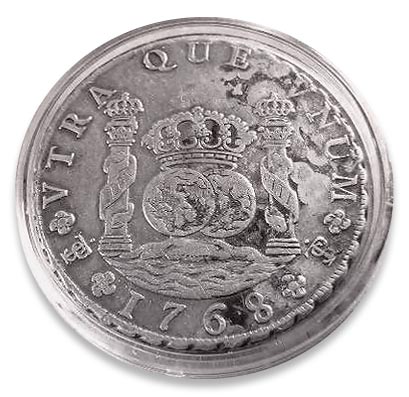
The fleet and the hurricane
In the summer of 1715, Spain sent two fleets home together. The Nueva Espana fleet under Captain-General Juan Esteban de Ubilla gathered silver and goods at Veracruz, while the Tierra Firme fleet under Antonio de Echeverz loaded gold and emeralds from South America. The two joined at Havana, and on 24 July 1715 the combined fleet, eleven Spanish ships plus a French frigate named Le Grifon, sailed for Spain up the Florida coast, riding the Gulf Stream north.
They sailed into hurricane season. Around 2am on 31 July, a powerful storm caught the fleet against Florida's shore and drove every one of the eleven Spanish ships onto the reefs and beaches. About 1,500 people died. Le Grifon, which had pulled ahead of the group, rode out the storm and reached Europe. The cargo, a royal fortune in silver coins, gold, and jewels, went to the seabed in shallow water within sight of land. Spanish records call it a plate fleet, from plata, the Spanish word for silver.
Salvage, then and now
The Spanish moved fast. Within weeks they set up salvage camps on the beach and sent divers down to the nearer wrecks, recovering much of the registered treasure over the following years. Even so, a great deal stayed on the bottom, spread across miles of coast, and the sites were slowly forgotten.
They came back to life in 1961, when a Florida building contractor named Kip Wagner began finding coins and worked out that he was standing over a lost fleet. His discoveries, and his 1966 book Pieces of Eight, launched the modern treasure hunt and gave the shoreline its name: the Treasure Coast. Salvage rights later passed to the firm 1715 Fleet-Queens Jewels, LLC, which still works the wrecks. The coins these sites give up are the silver cobs and gold escudos of the era, the same pieces of eight and doubloons the fleet was carrying home.
A salvage log
The story of the fleet, from loading to the latest recovery, laid out as a log.
- 1712 - 1715 Two fleets load
The Nueva Espana fleet under Ubilla and the Tierra Firme fleet under Echeverz gather silver, gold, and goods across Spanish America for the run to Spain.
- 24 Jul 1715 Sailing from Havana
The combined fleet, eleven ships plus the French frigate Le Grifon, leaves Havana and heads north up the Florida coast.
- 31 Jul 1715 The hurricane
Around 2am a hurricane drives all eleven Spanish ships onto the reefs off Florida's east coast. About 1,500 people die. Le Grifon, sailing ahead, survives.
- 1715 - 1719 Spanish salvage camps
Spain runs salvage camps on the beach and recovers much of the registered treasure with divers, but a great deal stays on the seabed.
- 1961 Kip Wagner's find
Contractor Kip Wagner recovers the first modern artifacts and later writes the book Pieces of Eight (1966). The wreck line becomes the Treasure Coast.
- 2015 The 300th anniversary haul
Salvage rights now held by 1715 Fleet-Queens Jewels, LLC. On 31 Jul 2015, the anniversary of the loss, the team recovers about $4.5 million in gold coins.
- 2025 Still coming up
A further recovery off Vero Beach brings up over $1 million more in coins, a reminder that the fleet is not emptied.
What is still found
The fleet is not emptied. On 31 July 2015, exactly three hundred years after the loss, a Queens Jewels crew recovered about $4.5 million in gold coins from one of the sites. In 2025, another recovery off Vero Beach brought up over $1 million more. Beyond the organized salvage, single coins still wash onto the public beaches after storms churn the sand, which is why beachcombers on the Treasure Coast keep their eyes down. If you find one, read our guide to a coin found on a Florida beach before you touch it.
Sources
Frequently asked questions
What was the 1715 Treasure Fleet?
It was a combined Spanish fleet of eleven ships carrying silver, gold, and goods from the Americas back to Spain. On 31 July 1715, a hurricane wrecked all eleven along Florida's east coast, killing about 1,500 people. Only the French frigate Le Grifon, sailing ahead, survived.
Where did the 1715 fleet sink?
Along Florida's Atlantic coast between roughly Sebastian and Fort Pierce, in what are now Indian River and St. Lucie counties. The wrecks are why that shoreline is called the Treasure Coast.
Is treasure from the 1715 fleet still found?
Yes. Coins and artifacts still come up. On the 300th anniversary in 2015, salvors recovered about $4.5 million in gold coins, and a 2025 recovery off Vero Beach brought up over $1 million more. Coins also wash onto the beaches after storms.
Who owns the 1715 fleet wrecks?
Salvage rights are held by 1715 Fleet-Queens Jewels, LLC, which works the sites under US admiralty custodianship. Artifacts abandoned in Florida state waters involve the state as well. Anyone finding material should verify the current law with the Florida Division of Historical Resources.